


Stick War: Legacy
Max Games Studios
I went into Stick War: Legacy expecting a simple stick-figure battle game, but I found a strategy experience that asks for more attention than its spare visual style suggests. You guide an army through the world of Inamorta, choose when to train units, and decide how to balance pressure on the battlefield with the need to protect your own base. The presentation is deliberately plain, yet the decisions can become surprisingly tense.
That contrast is the most interesting thing about it. The characters are easy to recognize, the battlefield is not overloaded with decoration, and the basic objective is quickly understandable. At the same time, success depends on timing, resource choices, unit roles, and knowing when an aggressive move is actually reckless. I would recommend it to someone who wants a strategy game that works in short sessions but still rewards learning. I would not recommend it to anyone looking for a slow, highly detailed strategy simulator or a completely hands-off experience.
What the game feels like after the first few battles
The central appeal is commanding different kinds of fighters rather than simply tapping an attack button and watching a result. The store summary points to the sword, spear, archer, and mage, and that mix gives the battles their personality. Each unit suggests a different way to approach a problem: close-range pressure, defensive reach, ranged support, or more specialized magical force. I quickly learned that producing a stronger-looking unit is not always the best answer if it leaves the rest of the army exposed.
Related News

Evony: The King's Return – A Masterclass in Strategy Gaming
Frost & Flame: King of Avalon – A Medieval Strategy Masterpiece
The controls are built around direct interaction with the battlefield. I can influence individual units, shift attention between parts of the fight, and make decisions while the action is already moving. That makes the game more engaging than a menu-only strategy title, but it also means that calm planning can turn into hurried input when several threats appear together.
What makes the design work is its readable cause and effect. When I lose a battle, I can usually identify a mistake: I spent too much on one type of fighter, attacked before my line was ready, or ignored an opening near my base. That clarity matters for accessibility as well as enjoyment. A player can learn from a failed attempt without needing to decode a complicated interface first.
Related News

Why WhatsApp Messenger Still Makes Everyday Communication Feel Easy

Jurassic World: The Game Is the Better Dino Tycoon for Strategic Players

Threads in Real Life: Who Should Join, Lurk, or Leave

How SHEIN Turned Shopping Into an Endless Content Feed

How to Make Fortnite Feel Smarter on Mobile

Should You Switch to Microsoft Outlook on Mobile?
Readability and navigation in real play
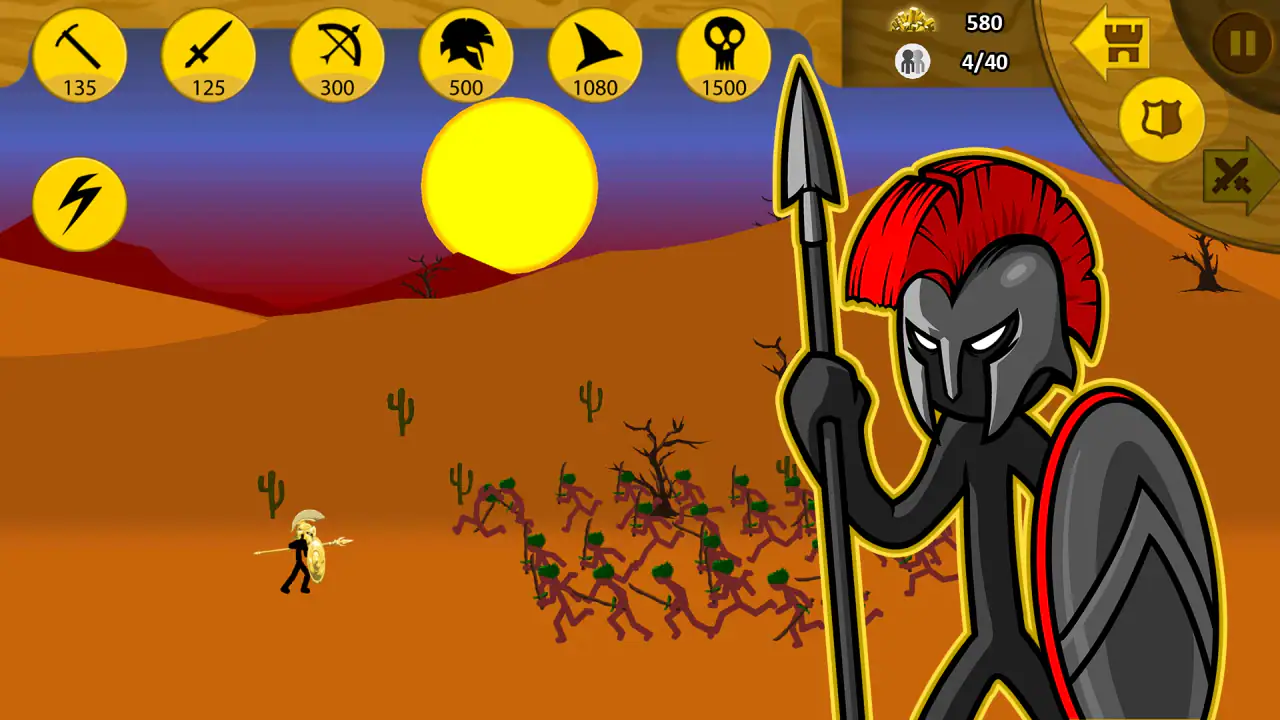
The visual language is one of the game's strongest inclusive qualities. Stick figures have clear silhouettes, and the major unit types are visually distinct enough that I can often identify them without studying tiny details. The uncluttered art direction helps during a crowded fight because there is less decorative material competing with the units and the objective.
That does not mean every moment is effortless. Once several characters overlap, the battlefield becomes harder to parse, especially when I am trying to select one unit instead of the group around it. A smaller phone screen can make that problem more noticeable. I found it easier to play when I kept my attention on broad formations and immediate threats instead of attempting delicate control over every fighter.
Navigation outside the battle is comparatively approachable. The game presents its strategy through recognizable choices rather than a large web of menus. That helps players who dislike dense interfaces, and it reduces the amount of reading needed before starting a match. The trade-off is that the simplicity can hide the consequences of a choice. New players may understand what a unit does in general without immediately understanding how much it changes their economy or defensive rhythm.
Gallery
The clearest way to learn is to treat each early defeat as a small experiment. I recommend changing one decision at a time: try a different opening unit, hold the army back slightly longer, or invest in a different balance of support. If everything changes at once, it becomes difficult to tell what actually improved the result.
How the four main unit ideas affect understanding
The sword unit is the easiest role to grasp because it provides immediate close-range pressure. Spears introduce a more defensive way to control space, while archers reward distance and protection. Mages are less straightforward because their value depends on timing and the situation around them rather than simply standing in the front line.
This variety gives the game more depth than its minimal artwork might suggest, but it also creates an accessibility challenge for players who need information to be presented very explicitly. The game teaches through play and repetition, so someone who prefers detailed explanations, slower tutorials, or comprehensive written guidance may need patience. I learned more by watching how a unit behaved in several battles than by relying on a single first impression.
A useful habit is to avoid judging a unit after one poor result. A ranged fighter that seems weak may have been placed too close to danger. A defensive unit that looks slow may be doing its job by buying time. This is a concrete advantage for players who enjoy observation and pattern recognition, but it can frustrate anyone who wants every choice to produce an obvious immediate payoff.
Motor demands and sensory comfort
From a motor perspective, the game is more demanding than a turn-based strategy title. Battles happen in real time, and there are moments when quick selection or rapid prioritization matters. I could play with ordinary touch controls, but the experience is not equally comfortable for every hand size or every level of precision. On a compact device, selecting a specific character in a busy group may require more careful tapping than the simple art suggests.
Players with limited dexterity may find the broad strategic decisions manageable while struggling with moments that reward fast, accurate input. The game is therefore better suited to people who can pause mentally between actions and accept that some fights may require several attempts. It is less suitable for someone who needs generous timing, highly configurable controls, or a strictly turn-based pace.
The sensory presentation is restrained compared with many modern action games. The stick-figure style avoids a flood of visual effects, and the battlefield generally remains easy to recognize. That can make longer sessions less visually tiring for me than games packed with particle effects and animated interface elements. However, active combat still creates motion and visual competition, particularly when multiple unit types are present.
Sound can also affect comfort, even when the screen remains readable. I would suggest testing the game in a quiet setting and adjusting the device's audio to suit your needs rather than assuming the default presentation will work for everyone. If you are sensitive to repeated battle sounds or prefer playing without audio, the visual cues become more important, so it is worth spending time learning the appearance and movement of each unit.
Playing in short, interrupted situations
One of the game's practical strengths is that it fits naturally into spare moments. I can imagine playing during a commute, while waiting for an appointment, or during a short break when I want something more involving than a puzzle but do not have time for a long campaign session. A battle can give that short period a clear beginning and end, while the strategic layer provides a reason to return.
Interrupted play is not completely frictionless, though. Real-time decisions lose their meaning if attention is divided at the wrong moment. I would not start a serious battle while carrying groceries, supervising a child, or waiting for an important call. The game is accessible in the sense that it does not demand a large setup, but it still demands focused attention once the action begins.
This distinction is important for people who want a game they can play one-handed or while multitasking. It may work for a relaxed session when one hand is available, but I would not describe it as a background game. The more crowded the fight becomes, the more valuable it is to see the whole battlefield and respond deliberately.
The minimum operating requirement is Android 7.0, which gives the game a broad potential device range. The current version is 2026.1.483, and I would still judge comfort by the actual phone or tablet rather than by the operating-system requirement alone. Screen size, touch responsiveness, and general performance can change how easy it is to select units and follow the action.
Where the design supports different players
The game's strongest support for different abilities comes from its visual simplicity and clear unit roles. A player who finds ornate interfaces tiring may appreciate the limited visual vocabulary. Someone who learns through repeated practice can gradually build an understanding of counters, timing, and positioning without needing to memorize a huge rule set.
It also supports different strategic personalities. A cautious player can focus on building a stable line and protecting the base, while an aggressive player can look for moments to push forward. That flexibility is useful because accessibility is not only about physical input; it is also about whether a game allows people to solve problems in a way that suits how they think.
For younger players, the content rating is Teen, so I would not automatically treat it as a children's game simply because the characters are cartoon-like stick figures. Parents should make their own decision based on the player's age and comfort with fantasy combat. The simple art may look harmless, but the game is still built around fighting and tactical destruction.
The free price makes trying it straightforward, which is helpful for players who need to test touch comfort, text readability, and sensory load on their own device. There are in-app purchases ranging from $0.49 to $104.99 per item, so I would be careful if the phone is shared with a child or if spending limits matter in your household. The ability to try the core experience without an upfront charge is convenient, but it does not remove the need to pay attention to purchase controls.
Three practical habits that improve the experience
First, I found it useful to keep a simple mental priority order: protect the base, maintain a workable frontline, and only then chase an opportunity. New players often see an exposed enemy and attack immediately, but a successful push can become a loss if the home position is left vulnerable. This habit reduces frantic reactions and makes the battlefield easier to read.
Second, I recommend using unit variety as a response to the situation rather than building the same force every time. A group that worked in one encounter may fail when the opposing pressure changes. Thinking in terms of roles—who holds space, who deals damage from safety, and who needs protection—makes the game more understandable than memorizing a single winning sequence.
Third, use failed attempts to identify the exact moment control was lost. Was the army too far forward? Did a support unit become exposed? Did you spend resources before establishing a safe position? This approach is especially useful for players who find rapid games stressful because it turns the next session into a focused practice goal rather than an attempt to react perfectly to everything.
A fourth tip is to avoid playing on a cluttered screen whenever possible. Notifications, split attention, or a poor grip can make a manageable battle feel much harder. The game rewards awareness, so a few seconds spent settling the device and choosing a comfortable posture can matter more than trying to tap faster.
What may become frustrating over time
The same directness that makes the game approachable can eventually feel limiting to players who want extensive customization. Compared with large strategy games built around diplomacy, sprawling maps, detailed economies, or long-form planning, this experience keeps its focus on battlefield decisions. That focus is a strength for quick sessions, but it may leave expert strategy fans wanting more layers.
There is also a learning curve hidden beneath the simple presentation. Knowing the names or appearances of the units is easy; understanding when to commit, retreat, or combine roles takes longer. Players who expect a casual game with no pressure may be surprised by how punishing a poorly timed decision can feel.
Touch precision is another remaining barrier. I would skip this game if you need highly adjustable input behavior or if selecting small targets on a phone is consistently uncomfortable. A larger screen may make the battlefield easier to follow, but I would not assume that it solves every motor challenge. The game is designed around active control, so players who need a slower or more forgiving interaction model may prefer turn-based alternatives.
The monetization also deserves a realistic mention. The game is free to start, but optional purchases can become relevant for players who want to spend money on progression or convenience. Because individual items can reach $104.99, I would enable purchase safeguards before handing the device to someone else. That is not a reason for me to dismiss the game, but it is a reason to approach it deliberately rather than treating every free download as financially consequence-free.
How it compares with other strategy choices
Against turn-based strategy games, this one feels more immediate and physically involved. You do not have unlimited time to inspect every possibility, so it suits players who enjoy making a reasonable decision and adapting quickly. Turn-based alternatives are better if you need to process information slowly, rely on precise planning, or take breaks between every move.
Compared with large real-time strategy games, it is much easier to understand at a glance. There are fewer layers competing for attention, and the stick-figure battlefield is less intimidating for a newcomer. The trade-off is that it does not offer the same broad management experience as a title centered on cities, technology trees, diplomacy, or large maps.
Compared with idle strategy games, it asks much more from the player. Your attention affects the result, and simply waiting is not the main attraction. That makes it a better choice for someone who wants to feel responsible for a victory, but a worse choice for anyone seeking a low-effort game to check for a few seconds at a time.
Who I would recommend it to
I would recommend it to players who like compact tactical battles, clear unit roles, and the satisfaction of improving through repetition. It is particularly appealing if you want a strategy game that can be understood quickly but not mastered immediately. The minimalist art is also a good fit for anyone who prefers a clean battlefield over a visually crowded fantasy presentation.
I would be more cautious recommending it to players with motor limitations that make rapid touch selection difficult, or to people who need extensive accessibility settings to tailor controls and sensory presentation. I would also steer away anyone who dislikes fantasy combat, real-time pressure, optional purchases, or replaying a battle to correct a mistake.
The game's popularity gives it useful context: Max Games Studios has built a title with an average rating of 4.8 from around 3.1 million ratings, and it has passed 100 million installs. Those numbers do not guarantee that it will suit your hands, eyesight, attention span, or preferred pace, but they do reflect how broadly the simple formula has connected with players.
My inclusive verdict
After spending time with it, I see Stick War: Legacy as a focused strategy game with a welcoming visual surface and a more demanding control layer underneath. Its clearest strengths are readable unit silhouettes, a relatively uncluttered battlefield, a free entry point, and enough tactical variety to make repeated attempts worthwhile. It supports players who learn by watching patterns and making small improvements.
Its limits are just as important. Real-time action can challenge players who need slower input, crowded moments can make precise selection difficult, and the game does not appear designed around a large set of individualized accessibility controls. The Teen rating and optional purchases also mean that families should consider the context in which it will be played.
My final advice is simple: try it when you can give the battle your full attention, begin with broad strategic commands rather than frantic tapping, and judge comfort on your own device. If you want approachable strategy with direct battlefield involvement, this is an easy game to spend time learning. If you need turn-based pacing, extensive control customization, or a deep empire-management system, another strategy game will likely serve you better.
FAQs for Stick War: Legacy
What is Stick War: Legacy about?
Stick War: Legacy is a strategy game where players control an army of stick figures. The main objective is to conquer territories by managing resources, building units, and strategically deploying troops. It combines elements of action and strategy, making it engaging and challenging. Players must think critically to outsmart their opponents and expand their empire.
Is Stick War: Legacy free to play?
Yes, Stick War: Legacy is free to download and play on both Android and iOS platforms. However, it does offer optional in-app purchases that can enhance gameplay or speed up progression. Players can enjoy the game fully without spending money, but some may find the additional purchases convenient.
What are the main features of Stick War: Legacy?
Stick War: Legacy features a campaign mode with multiple levels, customizable troops, and unique abilities for each unit type. Players can upgrade their army and unlock powerful spells to gain an advantage. The game also includes various difficulty levels, ensuring a challenging experience for both new and veteran players.
Are there any multiplayer options in Stick War: Legacy?
Stick War: Legacy primarily focuses on single-player gameplay. However, it does offer challenges and tournaments where players can compete for high scores and rankings on leaderboards. While there is no direct multiplayer mode, these features add a competitive aspect to the game.
What are the system requirements for Stick War: Legacy?
Stick War: Legacy is designed to run smoothly on most modern smartphones and tablets. For Android users, a device with Android 4.4 or higher is recommended. iOS users should have iOS 9.0 or later. The game is optimized for performance, ensuring a seamless experience across different devices.
Pros
- Engaging gameplay with strategic depth.
- Simple controls for easy navigation.
- Regular updates with new content.
- Offline mode available for travel.
- Variety of units and customization.
Cons
- In-app purchases can be costly.
- Ads may interrupt gameplay.
- Limited multiplayer options.
- Graphics are fairly basic.
- Progression can be slow at times.


